ServicesExtractions
Tooth Extractions for Kids in Taunton
When a tooth is too decayed or cracked to save, or a baby tooth won't budge while the adult tooth comes in behind it, we remove it with careful numbing and plain, kid-friendly explanations. You'll see photos of what we found before anything starts.
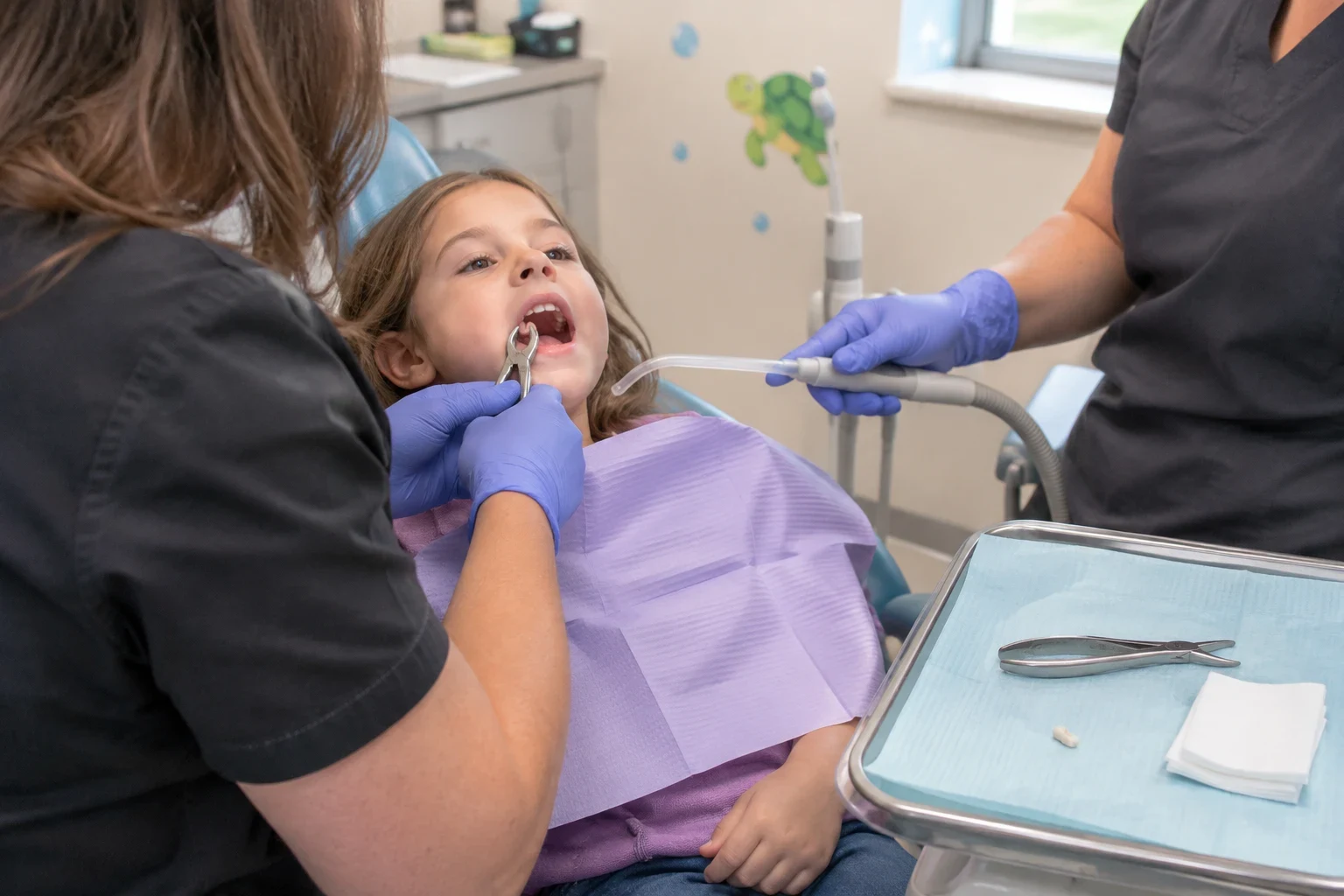
When Pulling a Tooth Is the Right Call
We save teeth whenever we reasonably can. A cavity can often be handled with fillings, and a baby molar with an infected nerve may be treated with a root canal and a pediatric crown. An extraction is the answer when the tooth can't hold a repair, when infection has spread around the roots, or when a baby tooth is blocking the permanent tooth that should replace it.
Before we recommend anything, we take X-rays and close-up photos and sit down with you to look at them together. You'll see the decay, the crack or the crowded adult tooth for yourself, so the decision makes sense and doesn't feel like something you were talked into.
Families from Taunton, Raynham, Dighton and nearby towns bring their kids to us for this, and we plan each visit around keeping your child calm and comfortable.
What Your Child's Extraction Includes
- Imaging before any work
- We take X-rays and close-up pictures of the tooth and the area around it so we can see root shape, infection and where the adult tooth sits. You look at these images with us before we begin.
- Careful numbing
- We start with a flavored numbing gel on the gum, then give local anesthetic slowly so your child feels pressure, not a sharp pinch. We wait until the area is fully numb before going further.
- Kid-friendly explanations
- We tell your child what we're doing in simple words and show the tools before using them. Kids handle the visit better when nothing is a surprise.
- Before-and-after photos
- Once the tooth is out, we capture the site and walk you through what we removed and why. If the tooth was cracked or abscessed, you'll see it.
- Planning for the gap
- A baby molar lost years early leaves an opening that neighboring teeth tend to lean into. If that's likely for your child, we'll explain whether one of our space maintainers makes sense to keep the room open.
- Written aftercare
- You leave with clear instructions for the rest of the day and the next few days, so you know what's normal and what's worth a phone call.
Signs Your Child May Need a Tooth Removed
A "shark tooth" row
The adult tooth is coming in behind a baby tooth that hasn't loosened. This is common with lower front teeth, and the baby tooth often needs help coming out.
A bump or pimple on the gum
A small swelling near a tooth that drains or comes back can mean an infection at the root. On a baby tooth with heavy decay, removal is sometimes the safest choice.
A tooth broken below the gum
Falls on the playground or during sports can split a tooth too deep to rebuild. We'll check whether it can be saved before anything else.
Decay that has gone too far
If a cavity has destroyed most of the tooth, there may not be enough left to support a filling or crown.
Crowding before braces
Sometimes a braces plan calls for taking out a few teeth to free up space. We can take care of that and share our images and notes with your child's orthodontist.
How the Visit Goes
- 1
Look and talk
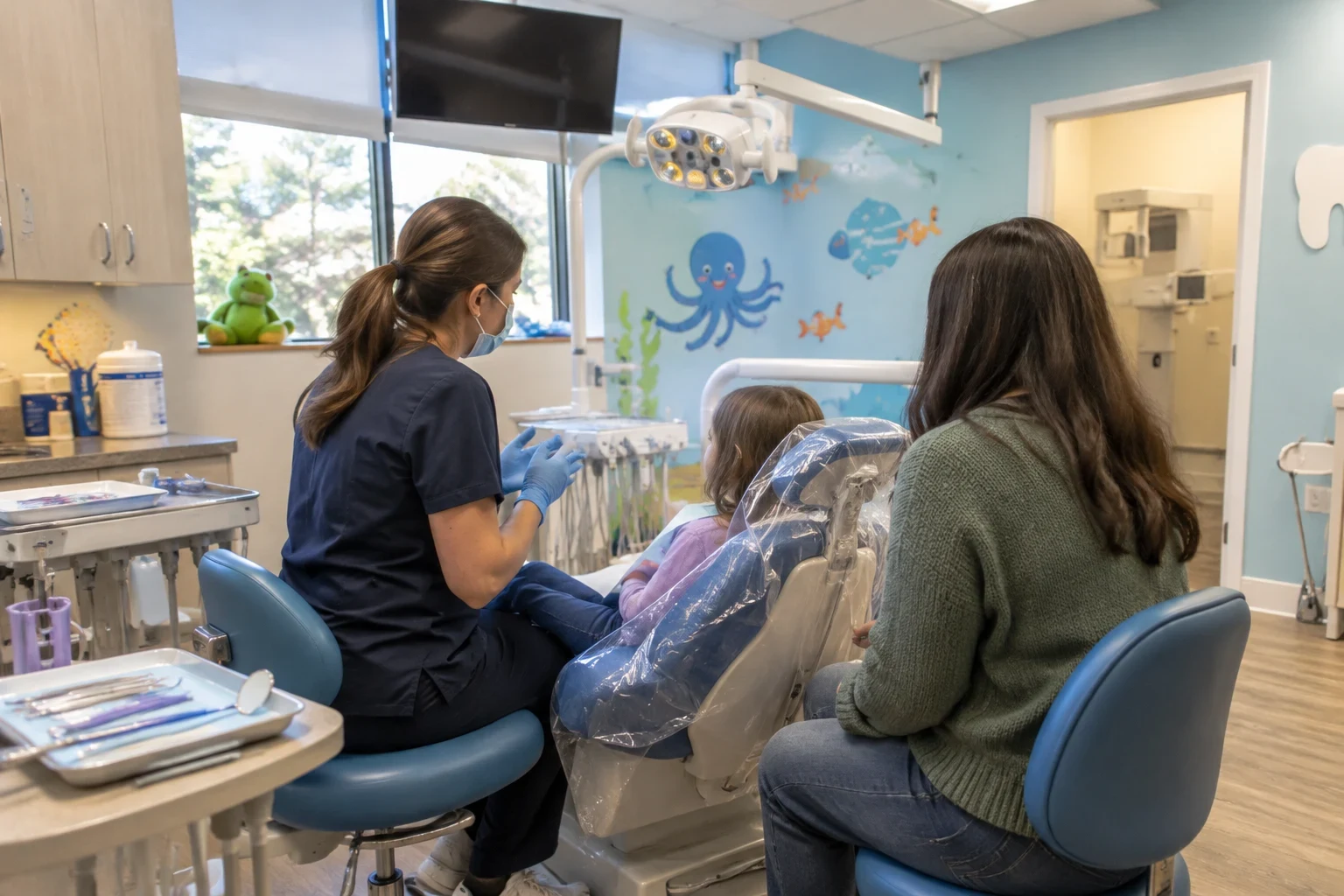
We go over the X-rays and pictures together and take every question you have. Then we describe what's going to happen to your child at a level that fits their age. If your child is very anxious or needs several teeth removed, we'll talk through sedation dentistry as an option.
- 2
Numb and check
Numbing gel goes on first, then the local anesthetic. We test the area and only begin once your child says it feels "sleepy."
- 3
Remove the tooth
We loosen the tooth gently and lift it out. Most baby tooth extractions take just a few minutes once your child is numb.
- 4
Gauze and a quick review
Your child bites on gauze to slow the bleeding while we show you the photos of the site and the tooth we removed.
- 5
Aftercare at your own pace
Soft foods, no straws and no spitting for the rest of the day help the clot stay in place. Keep an eye on your child while the numbness wears off, since kids sometimes chew on a cheek or lip they can't feel.
What Affects the Cost of an Extraction
Every extraction is different, so we explain exactly what your child needs once we've reviewed the X-rays. You can pay with MasterCard, Visa or Discover, use most insurance plans, or spread the cost out with the CareCredit Patient Payment Plan. We're glad to walk you through how your coverage usually treats this kind of visit.
- Baby tooth or adult tooth
- A loose baby tooth with short roots is usually simpler than a permanent tooth with long, curved roots.
- Simple or surgical
- A tooth that's broken at the gum line or not fully erupted may need a small incision, which takes more time and care.
- How many teeth
- Removing several teeth in one visit changes the time involved and sometimes the type of comfort care your child needs.
- Sedation and follow-up
- Sedation adds to the visit. If a space maintainer is needed afterward, that is a separate step we'll explain up front.
Questions Parents Ask About Extractions
Something not covered here? (508) 440-4166
Why not just let a baby tooth fall out on its own?
Often we do wait. But an infected baby tooth can harm the adult tooth forming underneath, and a stubborn baby tooth can push the new one out of line. We'll show you on the X-ray which situation your child is in.
Will it hurt?
Your child should feel pressure but not pain during the extraction, because we don't start until the area is fully numb. Afterward, mild soreness for a day or two is normal and usually eases with the pain reliever we recommend for your child's age and weight.
What can my child eat afterward?
Stick to soft, cool foods like yogurt, applesauce, pasta and scrambled eggs for the rest of the day. Avoid straws, crunchy snacks and very hot foods for the first day so the clot can settle in.
Does my child need a space maintainer?
It depends on which tooth comes out and how long until the adult tooth arrives. Losing a front baby tooth early rarely needs one, but an early lost back molar often does. We'll tell you at the visit and point out the reason on the X-ray.
When should I call after the extraction?
Call us if bleeding hasn't slowed after firm pressure on gauze, if swelling grows after the second day, or if your child runs a fever. A little pink in the saliva the first evening is normal.
Let's Take a Look Together
If you think your child may need a tooth removed, we'll start with photos and an honest explanation of the options. Getting your child registered as a new patient takes one phone call.