ServicesFluoride Treatment
Fluoride Treatment for Kids in Taunton
Fluoride varnish is a gentle coat painted on your child's teeth to harden enamel and slow early cavities. It takes about a minute, there are no trays to gag on, and we show you photos of any soft or chalky spots before we apply it.
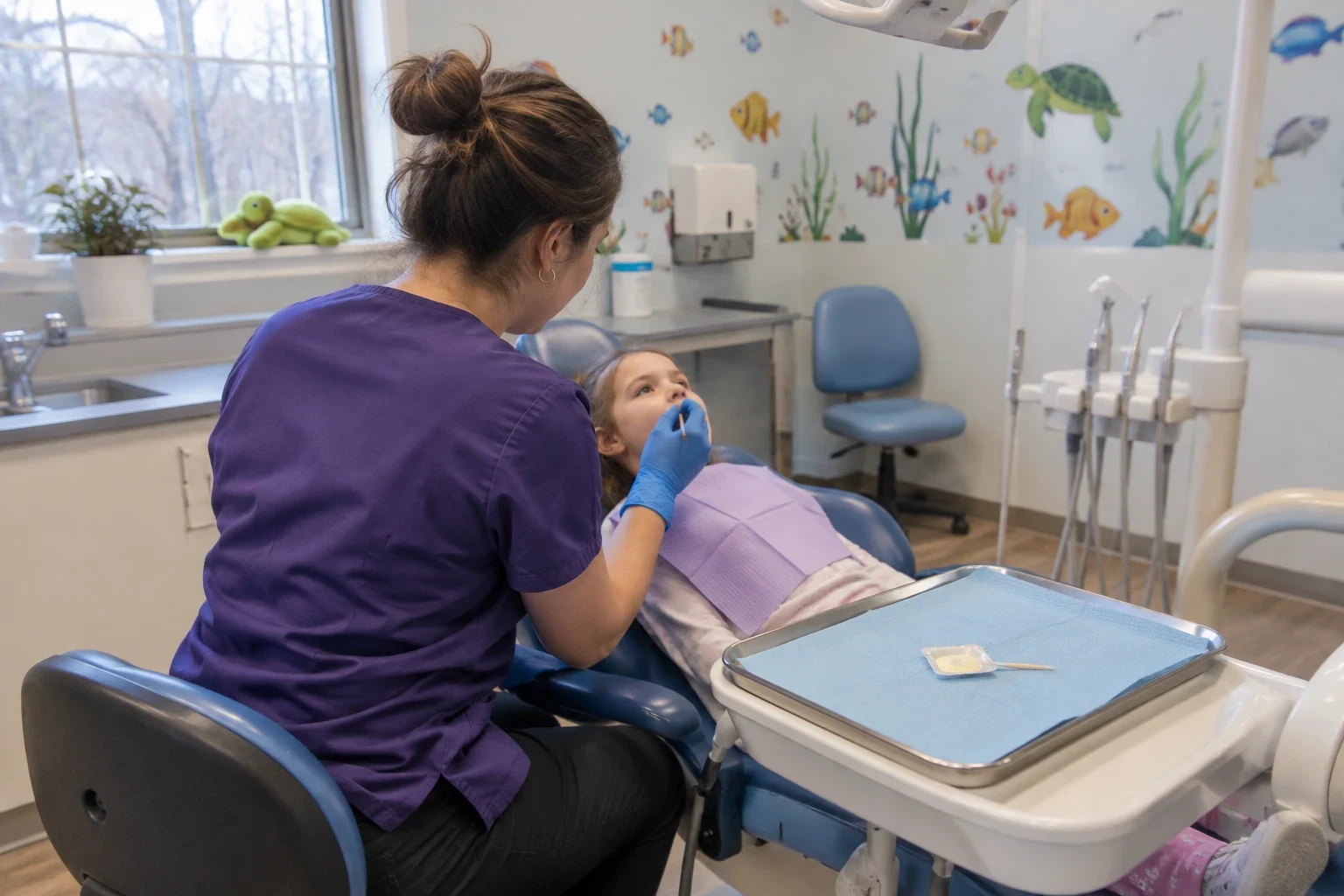
What fluoride varnish does for growing teeth
Enamel loses minerals every time kids eat or sip something sweet or starchy, and saliva puts some of them back. Fluoride tips that balance toward repair. A varnish holds a concentrated dose right against the tooth for several hours, so it can harden enamel and even reverse the earliest white spots before they become a cavity that needs a filling.
We usually apply it at the end of a checkup, once teeth are clean and we have had a good look. Babies with their first few teeth, toddlers, school-age kids and teens in braces can all benefit. How often your child needs it depends on their cavity risk, and we explain our reasoning instead of applying it by default.
Before the varnish goes on, we photograph any areas we are watching. You see the same spots we see, and at the next visit we compare the pictures to tell whether they are hardening or growing.
What a fluoride visit includes
A careful look before we paint
We check each tooth for chalky white lines near the gums, brown spots in the grooves and early decay between teeth. When a cleaning is part of the visit, it comes first so the varnish touches enamel, not plaque.
Close-ups of spots worth watching
Anything that looks soft or discolored gets a close-up picture. We show it to you on screen and keep it in your child's chart for comparison.
Varnish brushed on in seconds
The varnish is sticky and sets the moment saliva touches it. There is no tray, no foam and nothing to hold in the mouth, which is why even young toddlers usually handle it well.
Small choices for nervous kids
Where we can, we let your child pick the flavor or hold a mirror to watch. A little control goes a long way with a wary three-year-old.
Aftercare in plain words
We tell you what to avoid for the rest of the day and give you a short summary of what we saw.
Signs your child could use fluoride treatment
Chalky white spots
Dull white patches along the gumline are often the first stage of decay. At this point enamel can still harden again, and fluoride is one of the best tools to help it.
A recent cavity
If your child needed a filling in the last year, their other teeth have likely faced the same conditions. Varnish helps protect the ones that are still healthy.
Frequent snacking or sipping
Juice in a sippy cup, sports drinks at practice or grazing all afternoon keeps teeth bathed in sugar. Extra fluoride helps enamel keep up.
Braces or a space maintainer
Brackets, wires and appliances trap food, and white rings around brackets are common when braces come off. Kids wearing any appliance often benefit from more fluoride.
Well water or bottled water
Private wells and many bottled waters contain little or no fluoride. Tell us what your family drinks so we can factor it in.
Brushing is a daily battle
If toothbrushing turns into a standoff most nights, your child may not be getting enough fluoride from toothpaste alone.
How fluoride treatment goes, step by step
- 1
Check and clean
We start with your child's exam and cleaning, or a quick look if they were seen recently. Little ones can sit on a parent's lap.
- 2
Show and explain
We photograph any spots we want to track and show you what they mean. If something already needs a filling or sealants, we tell you then, and nothing extra happens without your okay.
- 3
Dry and paint
We dry the teeth with a little air or gauze and brush on a thin layer of varnish. Most kids are done within a couple of minutes.
- 4
Aftercare and the next visit
Your child can eat soft foods soon after but should skip hard, crunchy, hot and sticky foods for the rest of the day and hold off brushing until we say. We set the next visit based on how the watched spots look.
What affects the cost of fluoride treatment
Fluoride varnish is one of the smaller items in pediatric dentistry, and it usually rides along with a checkup. Your share depends mostly on your coverage and on what else happens during the visit, and we walk you through the charges before anything begins. Most insurance plans work with us, cards from MasterCard, Visa and Discover are welcome, and CareCredit Patient Payment Plan is another option if you'd like to spread costs out.
- Your insurance plan
- Many plans cover fluoride for kids, though most set an age limit and cap how many applications they pay for each year. We're happy to review your benefits with you, but the insurer makes the final call on what's covered.
- How often your child needs it
- A child with strong, healthy enamel may need varnish less often than one with active white spots. More frequent applications add up over the course of a year.
- What else happens that day
- A visit that also includes an exam, cleaning, X-rays or sealants costs more than varnish on its own. You'll know what's planned before we start.
- Follow-up on watched spots
- If a spot we're tracking keeps growing even with fluoride, the next step may be a filling, which is a separate charge.
Fluoride questions parents ask us
Something not covered here? (508) 440-4166
Is fluoride varnish safe for babies and toddlers?
Yes. The amount used is very small, and because the varnish sets quickly, very little is swallowed. It is commonly recommended once the first teeth come in. Bring any worries to the appointment, and we will talk them through before anything goes on your child's teeth.
Does my child need fluoride if they already use fluoride toothpaste?
Toothpaste gives a low daily dose. Varnish adds a stronger dose that stays on the enamel for hours. For kids with a higher cavity risk, the two together tend to work better than either one alone.
Will it stain my child's teeth?
The varnish can leave a slight yellow tint or a fuzzy feeling for the rest of the day. It comes off at the next brushing and does not stain the enamel.
How often should my child get fluoride?
Many kids get it at each checkup, often every six months. Children with active white spots or a history of cavities may benefit from more frequent applications. We base the schedule on what we see and on how those early spots change over time.
Can fluoride undo a cavity?
It can help reverse the earliest stage, when enamel is weakened but not yet broken. Once a hole forms, fluoride cannot fill it, and your child will need a filling or other treatment. That is why we photograph early spots, so we catch the change while it is still small.
Give your child's enamel a stronger start
A phone call is all it takes to register your child as a new patient or set up a checkup with fluoride. Families come to us from Taunton, Raynham, Dighton and the surrounding area.