ServicesRoot Canals
Root Canals for Kids in Taunton
When decay reaches the nerve inside a tooth, a root canal or pulp treatment can often save it and stop the ache. We keep your child comfortable, explain each step in kid-friendly words, and show you photos of what we found and what we did.
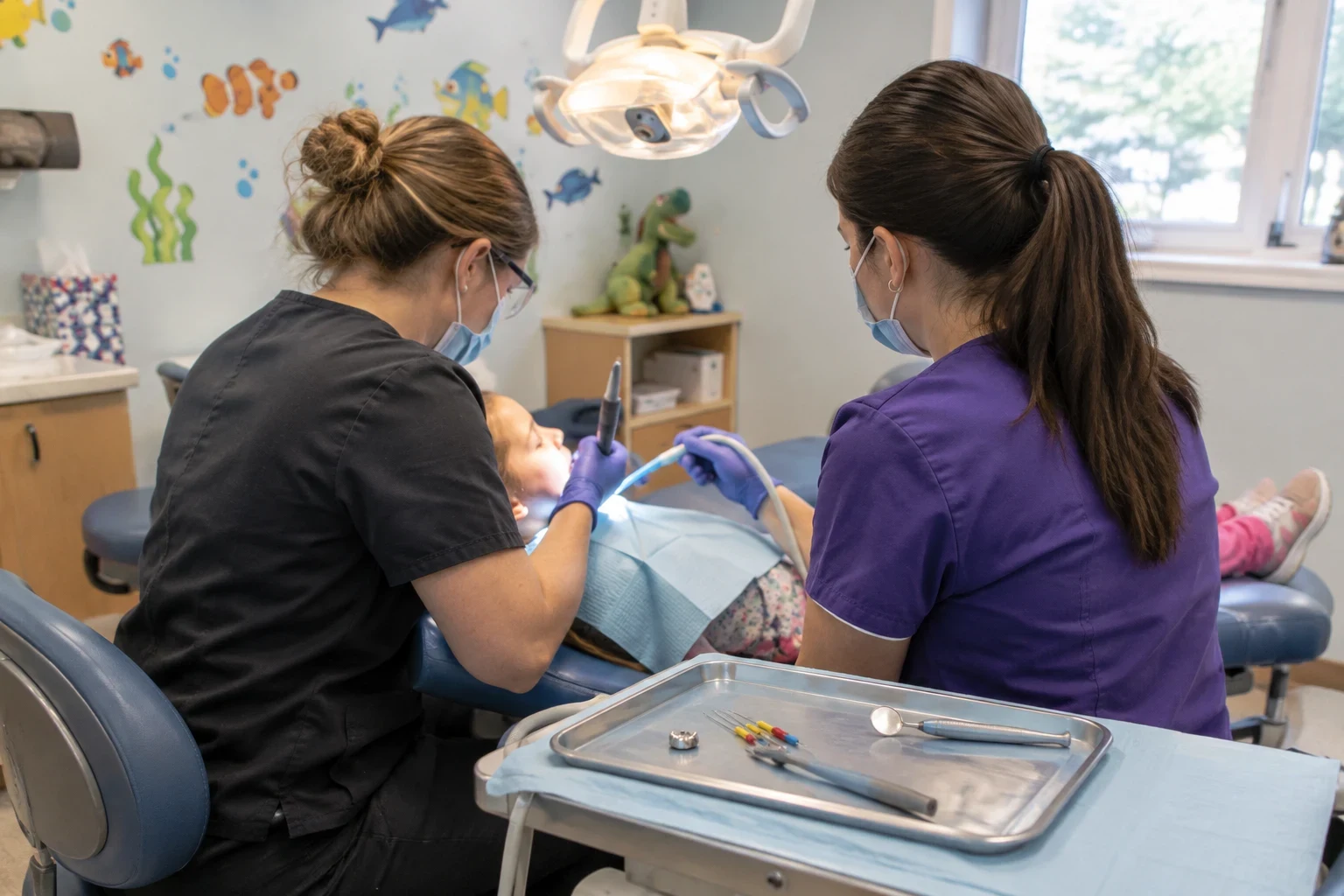
What a root canal means for a child
Inside every tooth is soft tissue called the pulp, which holds the nerve and blood supply. When a cavity gets deep enough to reach it, the pulp becomes inflamed or infected. That is when kids start waking up with a toothache or wincing at cold drinks. A filling alone can no longer fix the problem.
For baby teeth we usually do a pulpotomy, removing only the affected pulp in the crown of the tooth, or a pulpectomy, which cleans out the roots as well. For permanent teeth in older kids and teens, we do a traditional root canal. Either way, we aim to keep the tooth healthy and useful for chewing until the adult tooth underneath takes over, or for a lifetime when it is a permanent tooth.
Before we start, we show you the x-ray and an intraoral photo of the tooth. You see the decay for yourself, and we explain why we recommend treatment over a simple filling or an extraction.
What the treatment includes
- Photos and x-rays first
- We take an x-ray and a close-up image so you can see how deep the decay goes. We point out the nerve and talk through the options with you.
- Comfortable numbing
- A flavored topical gel goes on first, then the local anesthetic, so the injection feels much smaller to your child. Most kids describe it as a quick pinch and nothing more.
- Cleaning the infected pulp
- We remove the damaged tissue, rinse the area, and place a medicated material. Baby teeth get a filling that dissolves naturally as the tooth gets ready to fall out.
- Protecting the tooth afterward
- Back teeth that have had pulp treatment are weaker, so most need a crown to keep from cracking. Our Pediatric Crowns page explains the options.
- After photos for you
- Once the tooth is sealed, we take a final picture and x-ray so you can see the finished work and know what to watch for at home.
Signs your child may need pulp treatment
A toothache that wakes them up
Pain that shows up at night or without any obvious trigger often means the nerve is involved, not just the outer tooth.
Lingering sensitivity
If cold or sweet foods cause pain that lasts well after the bite, the decay may have reached the pulp.
A raised spot beside a tooth
Watch for a small blister-like spot on the gum next to a tooth. It can mean infection is draining from the root, and because it often doesn't hurt, it is easy to miss.
Swelling or a darkening tooth
A puffy cheek, or a tooth that turns gray after a fall, tells us the inner tissue may be damaged.
Chewing on one side
Kids often avoid a sore tooth without saying anything. If your child suddenly favors one side, it is worth checking.
What affects the cost
No two teeth are alike, so we walk you through a clear breakdown once the exam and x-rays are done. Most insurance plans are welcome here, and you can pay by Visa, MasterCard or Discover, or spread the cost out with a CareCredit Patient Payment Plan. If you are unsure what your coverage includes, we are glad to go over it with you before treatment.
Baby tooth or permanent tooth
Treating the top portion of pulp in a primary molar takes less time and material than a full root canal on a teen's molar, which can have three or four canals.
How far the infection has spread
Treating only the top of the pulp costs less than cleaning out every root.
Whether a crown is needed
Most treated back teeth need a crown to stay strong, which adds to the total.
Sedation
If your child needs nitrous oxide or another form of sedation to stay comfortable, that is a separate part of the estimate.
How the visit goes
- 1
A look and a talk
We examine the tooth, take x-rays and pictures, and walk you through what we see. You get a clear plan before anything starts.
- 2
Getting comfortable
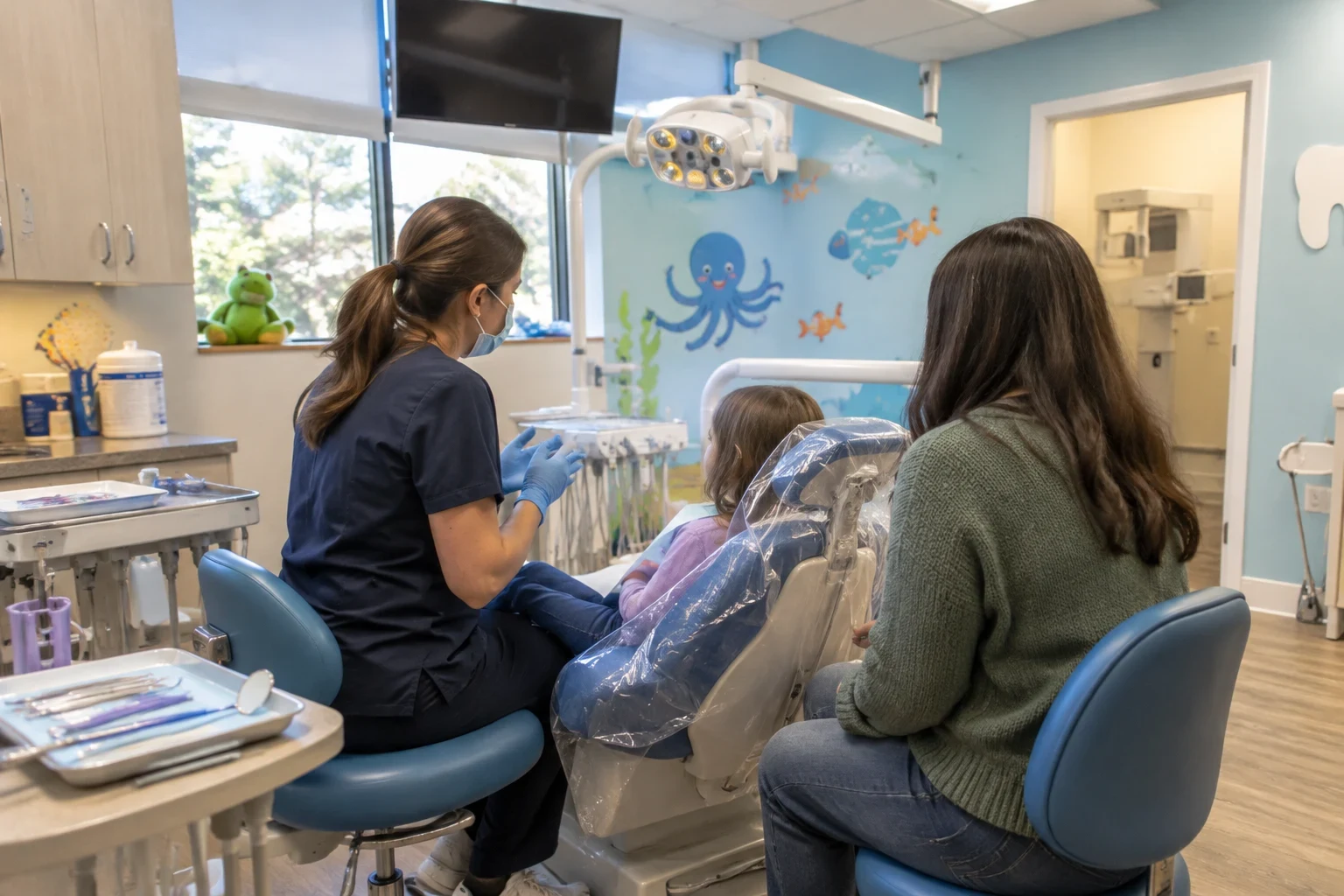
We numb the area gently and use calm, simple words with your child. For anxious kids or longer visits, we can talk about sedation dentistry options.
- 3
Treating the tooth
We clean out the infected pulp, place the medicated material, and seal the tooth. A pulpotomy on a baby tooth is often done in one visit.
- 4
Crown and follow-up
If a crown is needed, it is often placed in the same visit. We share the after images and check the tooth again at your child's next exam.
Questions parents ask about root canals
Why treat a baby tooth that will fall out anyway?
Baby teeth hold space for the adult teeth coming in underneath. Losing a back molar early can let nearby teeth drift and crowd the permanent tooth. Saving it also clears the infection so your child can eat and sleep comfortably.
Will it hurt?
The tooth is numbed before we begin, so most kids feel pressure rather than pain. Some soreness for a day or two afterward is normal and usually eases with children's pain medicine your pediatrician approves. Many kids feel better than before, since the infected nerve was the source of the ache.
Wouldn't it be easier to just pull the tooth?
Sometimes extraction is the better choice, and we will tell you honestly when that is the case. If the tooth can be saved, keeping it usually avoids the need for a space maintainer later. We show you the x-ray so you can see why we recommend one option over the other.
How long does the appointment take?
A pulpotomy with a crown on a baby tooth often fits into one visit. A root canal on a permanent tooth can take longer and sometimes needs a second appointment. We will give you a realistic time frame when we review the plan.
Can my child go back to school the same day?
Most kids can return to school or regular activities after the numbness wears off. We ask that they avoid chewing on the numb side so they don't bite their cheek or lip. If sedation is used, plan for a quiet rest of the day.
We'll check the tooth and show you what we see
Night-time aches, a spot on the gum or a tooth that has changed color all deserve an exam. We'll go over the x-ray and your options together, and families from Taunton, Raynham and nearby towns are welcome.