ServicesFrenectomies
Frenectomies in Taunton
When a tight band under the tongue or upper lip gets in the way of nursing, eating, speaking or brushing, a frenectomy releases it in a short visit. We photograph the tissue before and after, so you can see what we found and what changed for your child.
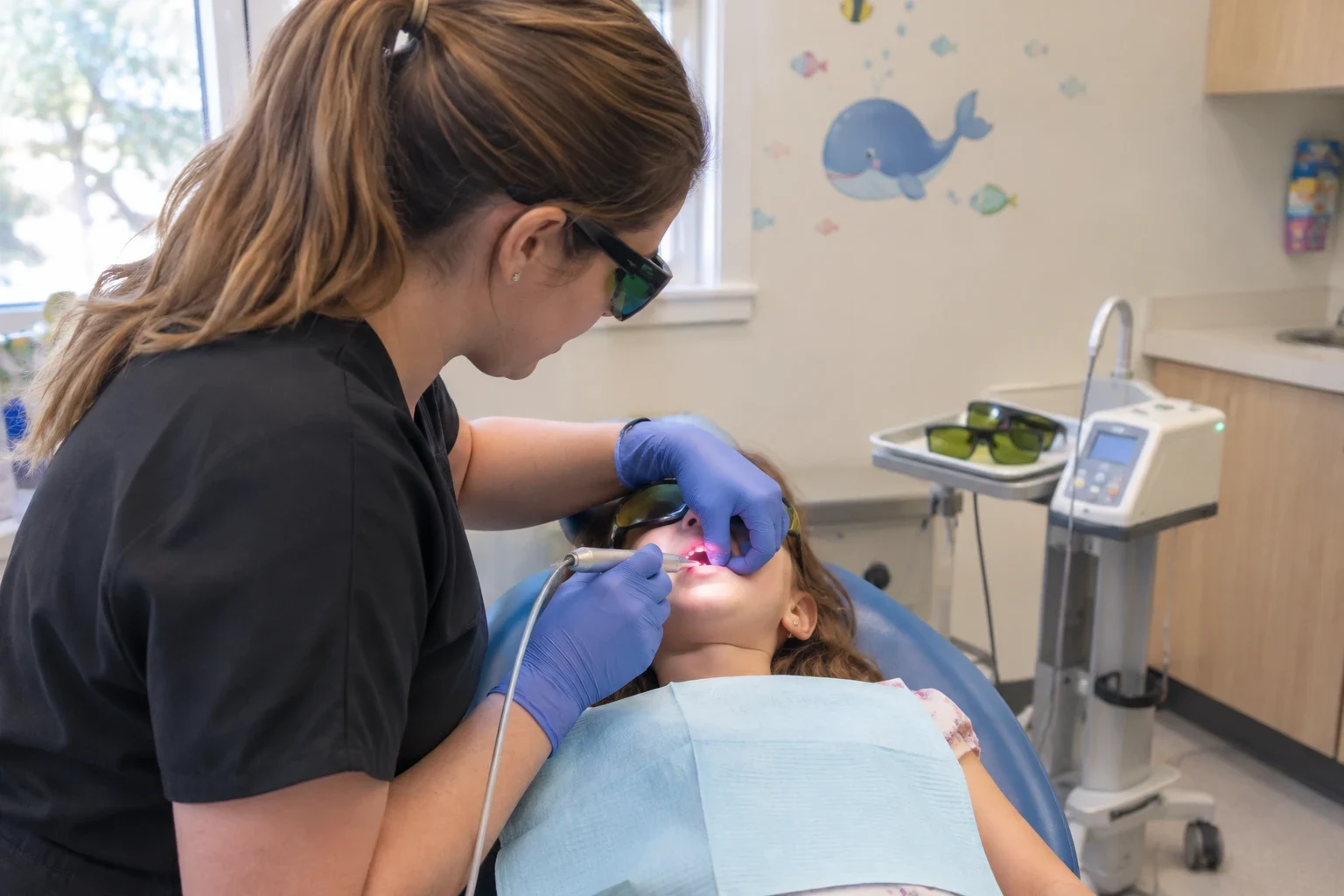
What a frenectomy does for your child
Everyone has a frenum, the small band of tissue under the tongue and inside the upper lip. In some kids it is short, thick or attached too far forward. Under the tongue that is called a tongue-tie. Under the upper lip, it is a lip-tie. Many ties cause no trouble at all and need nothing done.
When a tie does limit how the tongue lifts or the lip moves, a frenectomy gently releases the tissue so it can move freely. The procedure itself takes only a few minutes.
We start by looking, not cutting. We check how your child's tongue lifts and reaches, how the lip moves, and how the tie relates to feeding, speech or gum health. You look at the pictures with us, and we tell you plainly whether a release is likely to help or whether watching it is the better call.
What your child's frenectomy includes
- Before pictures and a movement check
- We take pictures of the frenum and watch how the tongue or lip moves. For babies, we ask about latch and feeding. For older kids, we ask about speech, eating and brushing.
- Numbing that fits your child's age
- Babies usually need only a topical numbing gel. Older children get local anesthetic so the area is fully numb. If your child is very anxious, we can talk about whether sedation dentistry makes sense.
- The release itself
- We gently release the tight tissue. For most kids it is over in minutes, and a parent can usually stay close by.
- After images and a written care plan
- We take another set of images right after the release so you can see the difference. You leave with written instructions for the gentle stretches that keep the area from healing back too tight.
- A follow-up check
- We see your child again to look at healing and record one more picture. Comparing them side by side shows you how things are progressing.
- Notes for your child's other providers
- If you ask, we can share our images and findings with your pediatrician, lactation consultant or speech therapist so everyone is working from the same information.
Signs your child may have a tie worth checking
Nursing is painful or slow
A clicking sound, a shallow latch, very long feeds or sore nipples for mom can point to a tongue-tie or lip-tie. A lactation consultant may be the first to notice it.
The tongue can't lift or stick out
Your child can't touch the roof of the mouth or push the tongue past the lips. Some kids show a heart-shaped notch at the tip when they try.
Certain sounds stay hard
Sounds like l, t, d, r and th need a tongue that moves freely. If speech therapy has stalled, a speech therapist may suggest having the tie checked.
A gap or gum pulling up front
A tight upper lip tie can hold the front teeth apart or tug on the gum above them.
Food collects under the upper lip
When the lip can't lift, food packs against the front teeth and brushing is a struggle. That raises the risk of cavities on those teeth.
What moves the price of a frenectomy
Every tie is a little different, so the fee for a release comes down to what we find at the exam and how your plan treats it. After we look at the pictures together, we go over the expected charges with you before anything is scheduled. We accept MasterCard, Visa, Discover, most insurance plans and CareCredit Patient Payment Plan, which lets you spread payments out over time.
One tie or two
A single tongue-tie or lip-tie release is a smaller visit than treating both in the same appointment.
Age and comfort needs
A baby who only needs numbing gel has a different visit from an older child who needs local anesthetic. A very nervous child may do better with sedation, which changes the visit again.
How your plan treats the release
Some insurance plans cover a frenectomy when it gets in the way of feeding or speech. The images and notes we take help show why the release was needed.
Follow-up checks
Most kids need just one healing check after the release. Now and then a child needs an extra visit so we can take a closer look.
How a frenectomy visit works
- 1
Register by phone
Call to start new patient registration. Tell us what you've noticed with feeding, speech or brushing, and anything other providers have said.
- 2
Exam and pictures
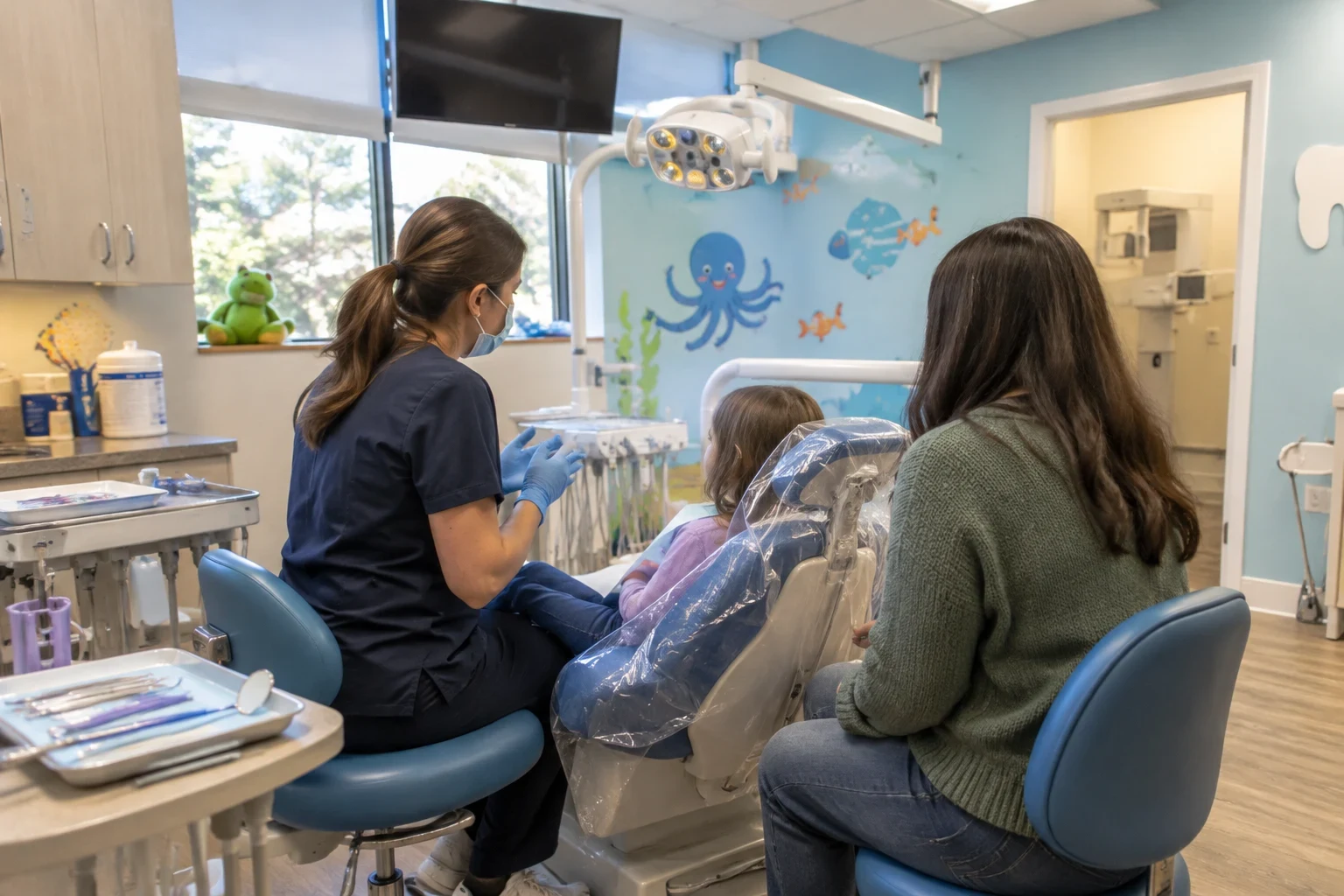
We examine the tie, capture clear images of it and walk you through what they show. If a release will help, we explain what we'll do and what it costs before anything is scheduled.
- 3
Release day
We numb the area, release the tissue and record how it looks afterward. Babies can usually nurse or bottle-feed right away, which often helps them settle.
- 4
Stretches and follow-up
You do short, gentle stretches at set times for the next few weeks. At the follow-up visit we compare pictures and check that the area is healing with good movement.
Frenectomy questions from parents
Will a frenectomy hurt my baby?
We numb the area first, and the release itself is over in moments. Most babies cry briefly, then calm down once they're back at the breast or bottle. Some fussiness over the next day or so is common, and before you leave we go over safe ways to keep your baby comfortable.
Does every tongue-tie need to be released?
No. Many ties look tight but don't affect how your child eats, talks or keeps teeth clean. If that's the case, we'll show you the photos, explain why, and suggest simply keeping an eye on it.
How long does healing take?
The area usually heals over a week or two. A soft white or yellow patch is normal during that time and is not an infection. Keeping up with the stretches is the most important part of healing well.
Will my child's speech improve right away?
Sometimes parents notice a change quickly, but often the tongue has to learn new movements. Many kids still need speech therapy afterward, and the release gives that work a better chance.
Can the tie grow back?
The tissue can heal back too tight if the stretches are skipped. That's one reason we take pictures at the follow-up, so we can catch it early and compare against the day of the release.
Have the tie checked, with photos you can see
Start new patient registration by phone and tell us what you've noticed. Parents bring their kids to us from Taunton, Raynham, Norton and nearby towns.