ServicesPediatric Crowns
Pediatric Crowns in Taunton
Deep decay or a broken corner can leave a baby tooth too weak to hold a filling. A small crown caps the whole tooth so your child can chew comfortably until the adult tooth is ready. You see photos from before and after, so nothing about the work is a mystery.
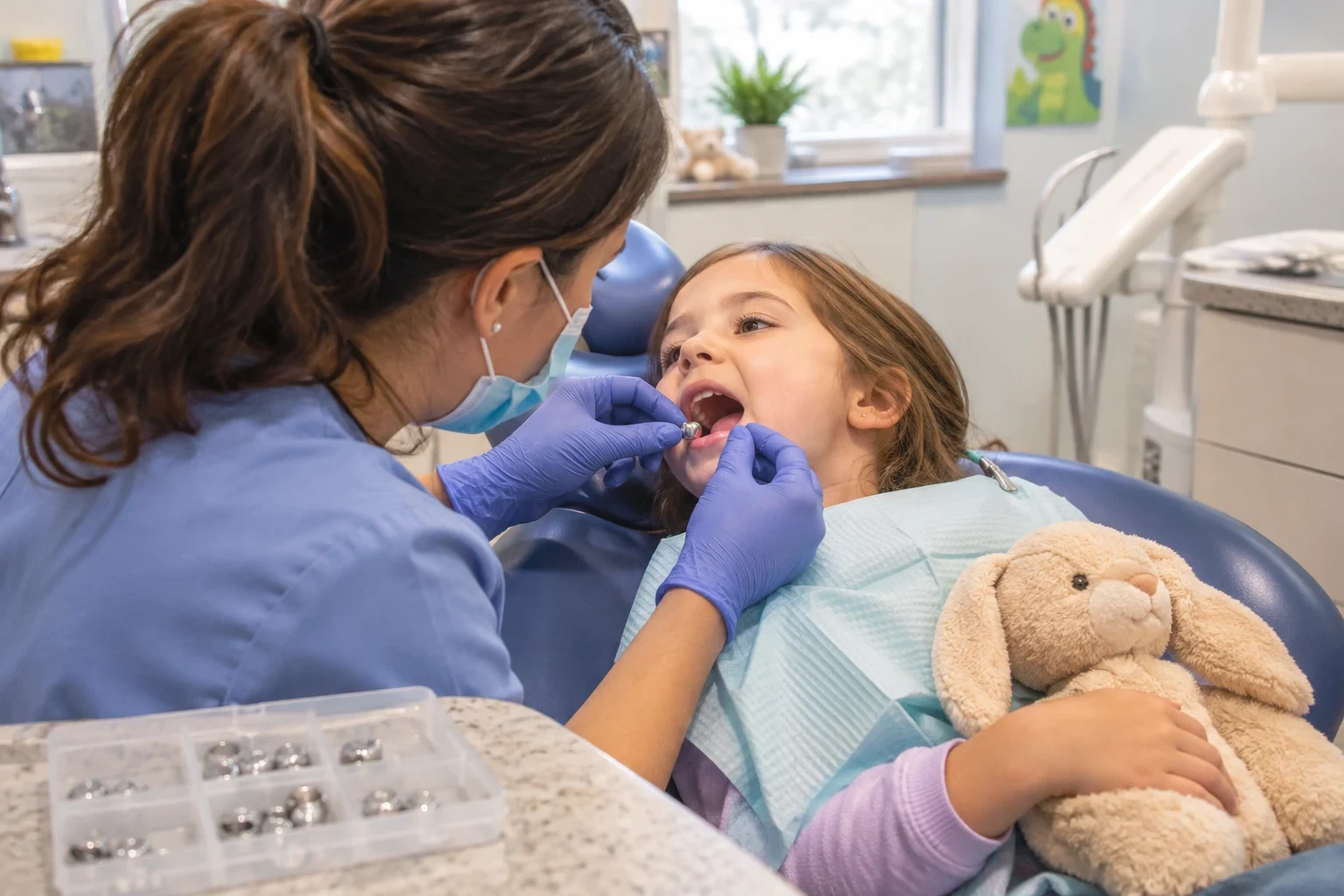
What a Crown Does for Your Child's Tooth
A pediatric crown is a small cap that fits over a tooth weakened by deep decay, a fracture or enamel that formed poorly. Baby teeth have thin enamel, so once decay spreads across several surfaces, a filling often has too little healthy tooth to hold onto. A crown wraps the tooth and holds it together.
Keeping a baby molar in place matters more than many parents expect. Those teeth guide the adult teeth into position, help kids chew and speak clearly, and some stay in the mouth for years. Losing one early can let neighboring teeth drift and crowd the space.
Before we recommend a crown, we go over the X-rays and what we see in your child's mouth with you. If a filling will do the job, we tell you that instead.
What Your Child's Crown Visit Includes
Photos and X-rays first
Close-up images and X-rays show how far the decay or crack goes. You get the same view we do before any decision is made.
Stainless steel crowns for back teeth
For baby molars, stainless steel crowns are strong, fit in one visit and hold up well to chewing. They are a long-standing, reliable choice for kids.
Tooth-colored options
Zirconia crowns and resin strip crowns match the color of natural teeth. We often suggest them for front teeth or when a parent prefers a tooth-colored smile, and we explain where each one works best.
Pulp treatment when needed
If decay has reached the nerve, the tooth usually needs a small pulp treatment before the crown goes on. Our Root Canals page explains how that works for baby teeth.
Comfort and numbing
We numb the area gently and talk your child through each step in kid-friendly words. For anxious kids or several crowns at once, Sedation Dentistry may be an option we discuss with you.
A look at the finished tooth
Once the crown is placed, we take another photo so you can see the result. You leave with simple instructions for brushing and eating that day.
Signs Your Child May Need a Crown
Decay across the chewing surface
When brown or gray staining covers much of the top of a molar, the decay underneath is usually wide too. Baby molars with cavities that size often need full coverage.
A cracked or chipped tooth
A fall on the playground or a hard bite can break off part of a tooth. If too much is missing, a crown protects what is left.
Pain when chewing
Kids may chew on one side, avoid crunchy foods or complain that a tooth hurts when they bite. That can mean the tooth is weak or the decay is deep.
A filling that keeps failing
When an old filling breaks or decay returns around it, the tooth may need full coverage instead of another patch.
Soft or chalky enamel
Some kids have enamel that did not form fully and wears or chips easily. A crown can stop that tooth from breaking down further.
How Crown Day Works
- 1
We look and show you
We review the X-rays and images with you and explain whether a crown, a filling or another option makes sense. You decide with all the facts in front of you.
- 2
Getting comfortable
Your child picks how they want to settle in, and we numb the tooth gently. If sedation was planned, we follow the steps we went over with you ahead of time.
- 3
Preparing and fitting the crown
We remove the decay, treat the nerve if needed and shape the tooth slightly. Then we choose a crown that fits snugly and cement it in place, usually all in the same visit.
- 4
Checking the bite
We make sure your child can bite down normally and that the crown sits comfortably next to the gums and neighboring teeth.
- 5
Your before-and-after photos
We show you the tooth as it looked when we started and how it looks now. Many parents tell us this is the part that helps them feel sure the work was worth it.
What Affects the Cost of a Pediatric Crown
Every child's mouth is different, so we explain the cost after we have examined the tooth and talked it through with you. You will know what the plan includes before we start. For payment, you can use MasterCard, Visa, Discover or CareCredit Patient Payment Plan, and we work with most insurance plans.
- Crown material
- Stainless steel crowns and tooth-colored zirconia or strip crowns differ in cost and in what insurance plans tend to cover.
- How many teeth
- Treating several teeth in one visit changes the total, though it can mean fewer appointments for your child.
- Pulp treatment
- If decay has reached the nerve, the added pulp treatment is part of the cost for that tooth.
- Sedation needs
- Kids who need sedation to stay comfortable will have that added to their plan, and we go over it with you in advance.
- Your insurance plan
- Coverage varies by plan. We can help you understand what your benefits are likely to cover for a crown.
Questions Parents Ask About Crowns
Something not covered here? (508) 440-4166
Is a crown worth it on a tooth my child will lose?
Often, yes. Back baby teeth can hang on until a child is 11 or 12, which is years of chewing. If one is lost early, nearby teeth can tip into the gap and crowd the adult tooth coming in. A crown keeps the tooth comfortable and holds that space.
Will the silver crown look strange?
Stainless steel crowns on back teeth are usually hard to notice when your child talks or smiles. If appearance matters to you, ask us about tooth-colored zirconia crowns, and we will tell you honestly whether they suit that tooth.
Does getting a crown hurt?
We numb the tooth gently before we start, so most kids feel pressure rather than pain. The gums may feel a little sore for a day or two afterward, and that usually settles quickly.
How long will the crown last?
On a baby tooth, a crown is meant to stay on until the tooth falls out naturally. It comes out with the tooth when the adult tooth is ready. We check it at each exam and cleaning visit.
What can my child eat after the appointment?
Hold off on food until feeling comes back to the mouth, since a numb lip or cheek is easy to chew by accident. Once your child can feel normally again, regular meals are fine. We do suggest skipping very sticky candy, which can tug on a crown.
Will I see what you did to the tooth?
Yes. We take photos before we start and after the crown is placed, and we walk you through them before you leave. You can ask us anything about what we found.
Let's Take a Look at Your Child's Tooth
If a tooth looks dark, broken or sore, we can check it and show you what is going on. Families from Taunton, Raynham and nearby towns can set up a first visit by phone.