ServicesFillings
Kids' Fillings in Taunton
If your child has a cavity, we clean it out gently and seal the tooth with a tooth-colored filling. Before we begin, you see a close-up photo of the decay, and afterward one of the finished tooth, so you know exactly what was done.
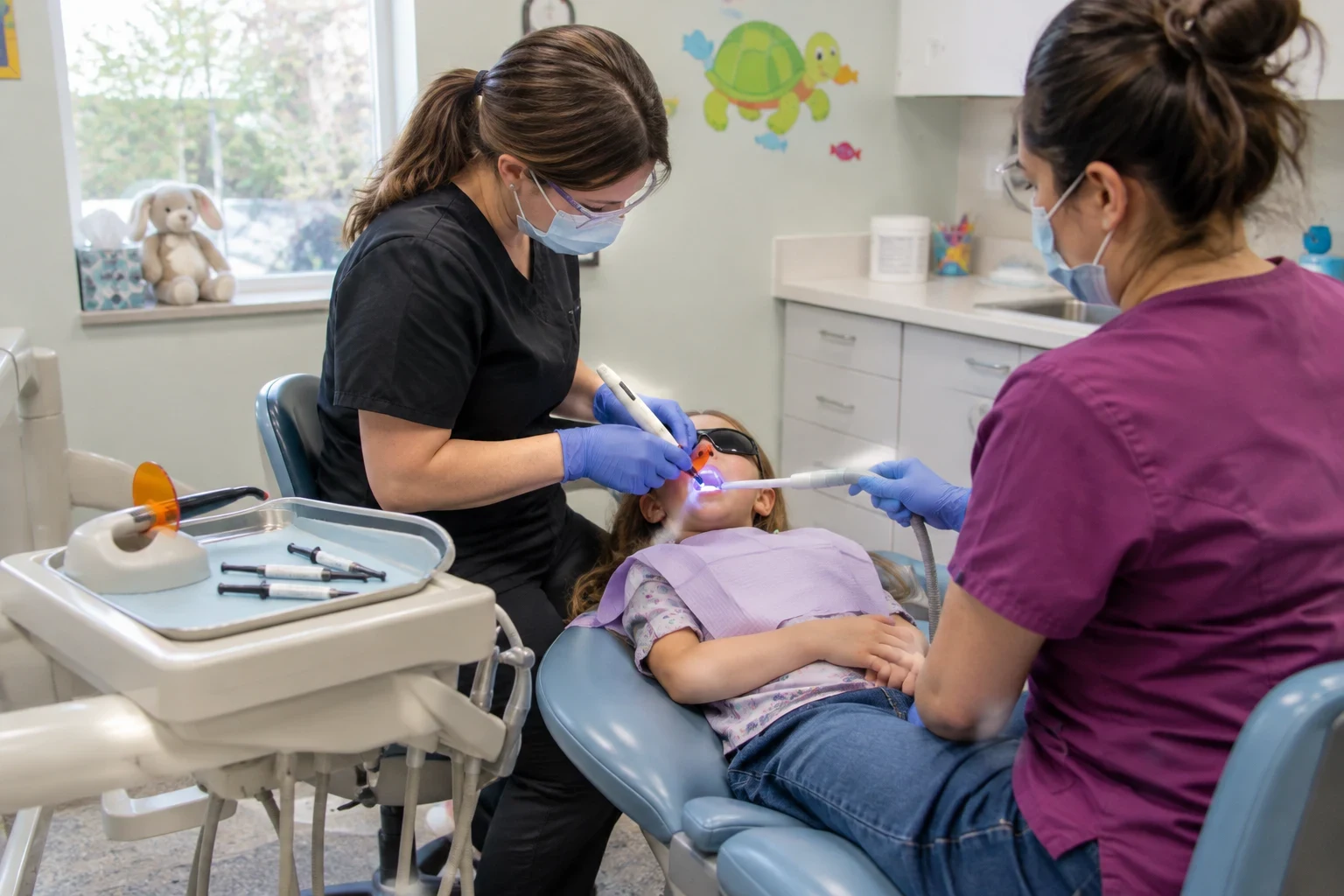
A small fix that keeps a cavity from growing
A filling cleans out the soft, decayed part of a tooth and seals the space with a tooth-colored material. Caught early, most cavities in kids need nothing more than this. Left alone, decay in baby teeth moves fast because the enamel is thinner than on adult teeth, and a small spot can reach the nerve in a matter of months.
Baby teeth matter even though they fall out. They help your child chew and speak clearly, and they hold the space the adult teeth will need later. Some back baby molars stay in place until age 10 to 12.
We take an intraoral photo before we touch the tooth and another when we are done. You see the dark spot, then the smooth, sealed surface. If the decay turns out deeper than a filling can handle, we show you that too and talk about the options before going further.
What a filling visit includes
- A careful look first
- We check the tooth, take X-rays if needed and capture a close-up picture. You see the cavity on screen before we begin.
- Numbing done slowly
- A flavored numbing gel goes on first, then a gentle injection most kids barely notice. We use simple, kid-friendly words and tell your child what each step will feel like.
- Tooth-colored material
- We use composite resin or glass ionomer, which blend in with the tooth. Glass ionomer also releases fluoride over time, a helpful choice for kids who get cavities easily.
- Bite check and polish
- We make sure the filling sits right when your child bites down, then smooth it so it feels like their own tooth.
- A final look together
- Before you leave, we show you the finished tooth on screen and explain what we found, what we removed and how to care for it.
Signs your child may need a filling
White or brown spots
Chalky white patches near the gumline are often the first sign of weak enamel. Brown or black spots usually mean decay has already started.
Wincing at cold or sweets
If ice cream, juice or cold water makes your child flinch, a cavity may be exposing the sensitive layer inside the tooth.
Favoring one side
Many kids never mention a sore tooth. Instead, you may notice them chewing only on the left or right, or leaving food on the plate they usually finish.
Food getting stuck in one spot
A small hole between teeth catches food. If your child keeps picking at the same place, it is worth a look.
A spot flagged at a checkup
Sometimes we find a cavity on an X-ray at a routine visit before your child feels anything. That is the best time to fix it, while it is small.
What affects the cost of a filling
Each filling is priced by the tooth and the size of the repair, and we go over the charges with you before we start. You can pay with Visa, MasterCard or Discover, use most insurance plans, or spread the cost out through the CareCredit Patient Payment Plan. If you are unsure what your plan covers, bring it up when you call and we will talk it through.
How many surfaces
A cavity on one surface of a tooth is a smaller job than one that wraps around the side or between two teeth.
Number of teeth
Several cavities can often be treated in one visit, which changes the total but saves trips back.
Material choice
Composite and glass ionomer are priced differently, and the right one depends on where the tooth is and how cavity-prone your child is.
Comfort support
Some kids do best with extra help to relax. If sedation dentistry is part of the plan, that is a separate cost we discuss with you first.
Your insurance plan
Coverage for fillings varies from plan to plan, so your share depends on your benefits.
How the appointment goes
- 1
Settle in
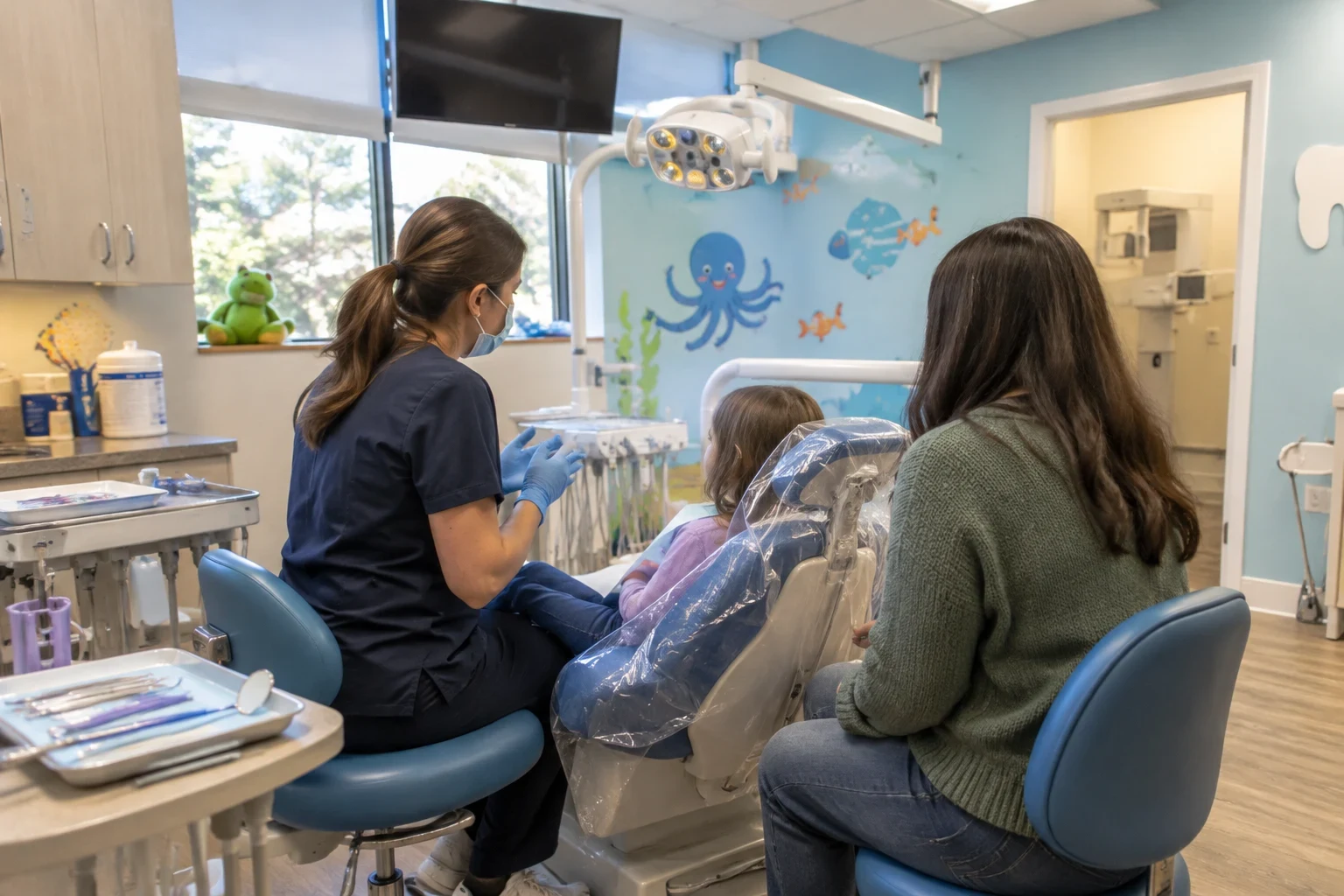
Your child gets a few minutes to get comfortable in the chair. Parents are welcome to stay close and hold a hand.
- 2
Show and numb
We take the before picture, explain the plan to you and your child, and numb the tooth. We wait until the numbness has fully set in.
- 3
Clean and fill
We remove the decay, shape the space and place the filling in thin layers, hardening each one with a small blue light. A single small filling usually takes well under an hour.
- 4
Check, compare and go
We check the bite, take the after picture and walk you through both images side by side. Your child heads out with a numb cheek and instructions to wait before eating.
Questions parents ask about fillings
Why fill a baby tooth that is going to fall out?
Decay doesn't wait for the tooth to fall out. An untreated cavity can cause pain, infection and an abscess, and losing a baby tooth early can let neighboring teeth drift into the space the adult tooth needs. A filling is usually the simplest way to avoid that.
Will the filling hurt my child?
The numbing gel and slow, gentle injection keep most kids comfortable during the filling itself. Afterward, the tooth may feel a little tender for a day or two, and children's pain reliever is usually enough if your pediatrician says it is fine.
When can my child eat after a filling?
Tooth-colored fillings harden right away, so the filling is ready. The concern is the numb cheek and lip, which kids tend to chew without noticing. Wait until the numbness wears off, usually a couple of hours, and start with soft foods.
What if the cavity is too big for a filling?
We will show you the image and X-ray and explain why. A large cavity may need a pediatric crown, and decay that reaches the nerve may need a root canal treatment for a baby tooth first. You decide on the next step after seeing what we found.
How can we keep from needing more fillings?
Regular exams and cleanings catch soft spots early, and sealants and fluoride treatment help protect the chewing surfaces of back teeth. At home, brushing twice a day and limiting sipping on juice or milk between meals make a real difference.
Get that cavity taken care of
Families from Taunton, Raynham, Norton and nearby towns bring their kids to us for gentle fillings with photos at every step. A quick call gets your child registered and on the schedule.