ServicesSealants
Dental Sealants for Kids in Taunton
Back molars have deep grooves where toothbrush bristles can't reach. We paint a thin, tooth-colored sealant into those grooves so food and germs have nowhere to settle. There are no shots and no drilling, and you see close-up images of each tooth before and after.
What a Sealant Does for Your Child's Teeth
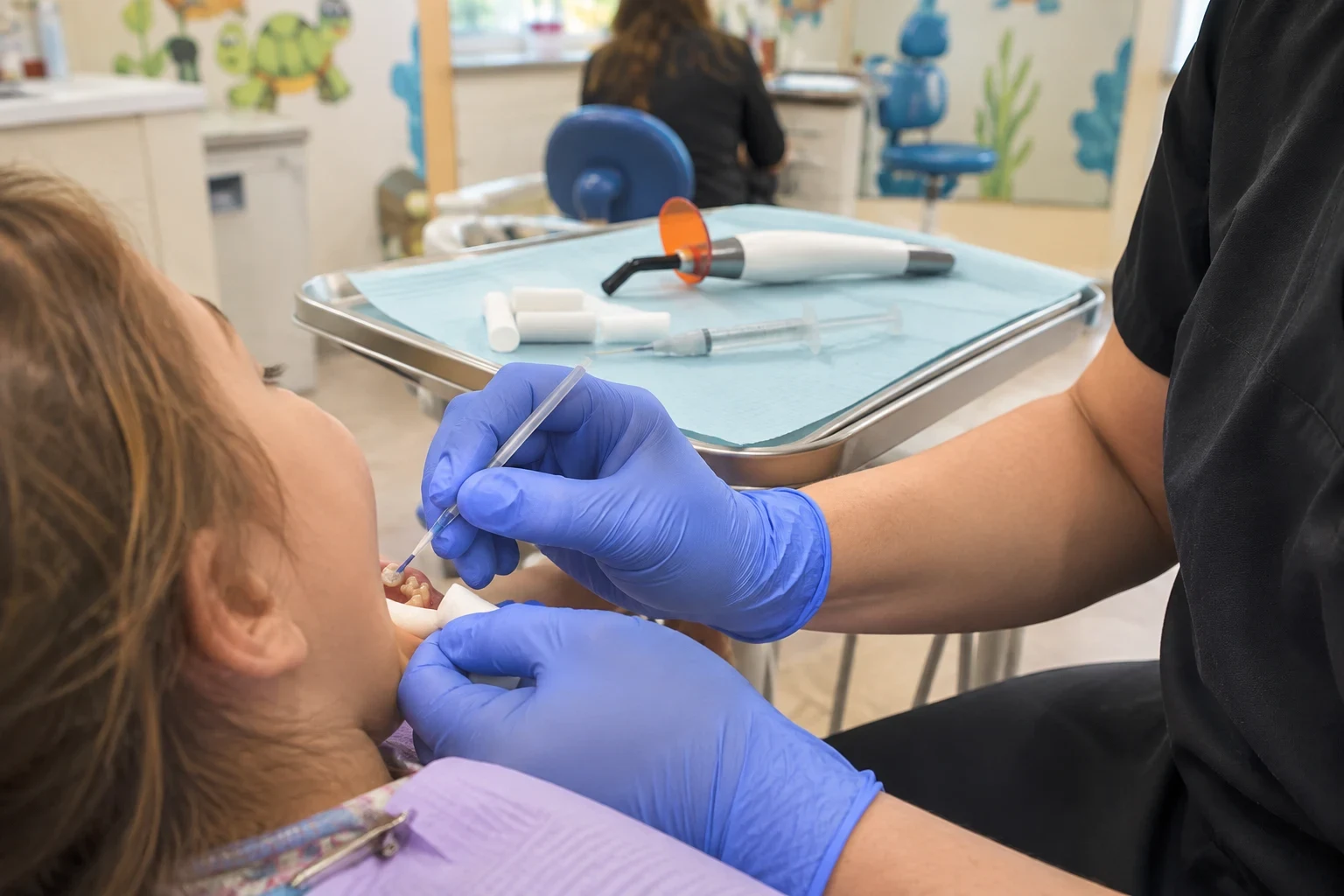
The chewing surfaces of molars are not flat. They are full of narrow pits and fissures, some thinner than a single bristle on your child's toothbrush. Food packs into them, bacteria feed on it, and that is where many cavities in kids start. A sealant is a liquid resin that flows into those grooves and hardens, leaving a smooth surface that is far easier to keep clean.
Most kids get sealants on their first permanent molars, which usually come in around age 6, and on the second molars that arrive near age 12. We sometimes recommend them for baby molars or premolars with especially deep grooves. Before we suggest anything, we take close-up photos of the teeth so you can see the grooves yourself and decide with us which teeth are worth sealing.
What Your Child's Sealant Visit Includes
- Close-up pictures first
- We take a magnified picture of each tooth we are considering. You see the deep grooves, any staining, and whether the surface is healthy enough to seal.
- A careful check for early decay
- Sealants go on healthy enamel. If a groove shows a soft spot, we point it out on the image and explain whether it needs a small filling first, so nothing gets sealed over a problem.
- Cleaning and drying each tooth
- We polish the groove clean and keep the tooth dry with cotton rolls. A dry surface is what lets the sealant bond well and stay put.
- Placing and setting the sealant
- We brush the liquid resin into each groove, then hold a small curing light over it until it sets, which only takes a moment. The finished surface is smooth and tooth-colored.
- After photos and a bite check
- We take a second set of images so you can compare before and after side by side. Then we check your child's bite and smooth any high spot.
Signs Your Child May Be Ready for Sealants
New back molars are coming in
The six-year molars and twelve-year molars are the most common teeth to seal. Sealing them soon after they fully come in protects them during the years they are most likely to get cavities.
Grooves look dark or stained
Thin brown or gray lines in the grooves often mean food and plaque are sitting there. Our close-up images show whether it is surface staining or something that needs more attention.
Food keeps getting stuck
If your child often feels food caught on the tops of their back teeth, those grooves are deep enough to trap it.
Cavities in the past
Kids who have already had fillings in baby teeth tend to benefit from extra protection on their new permanent teeth.
Brushing the back is a struggle
Young kids rarely reach the very back of their mouth well. A sealant helps cover the gap while their brushing skills catch up.
What Affects the Cost of Sealants
Sealant pricing is set per tooth, so the total depends mostly on how many teeth we seal and what we find on close inspection. We go over the plan with you before we start. For payment, you can use MasterCard, Visa or Discover, most insurance plans, or the CareCredit Patient Payment Plan.
How many teeth are sealed
Sealing two six-year molars costs less than sealing all four, plus premolars. We only recommend teeth with grooves that need it.
Early decay found in a groove
If a groove has a small soft spot, it may need a small filling or a combined filling-and-sealant before it can be protected.
Your insurance plan's rules
Many plans cover sealants on permanent molars but set age limits or exclude baby teeth. We can help you read what your plan says.
Touch-ups over time
Sealants can wear or chip after years of chewing. A small repair at a regular checkup usually costs less than resealing the whole tooth.
How Sealant Day Goes
- 1
A quick hello and look
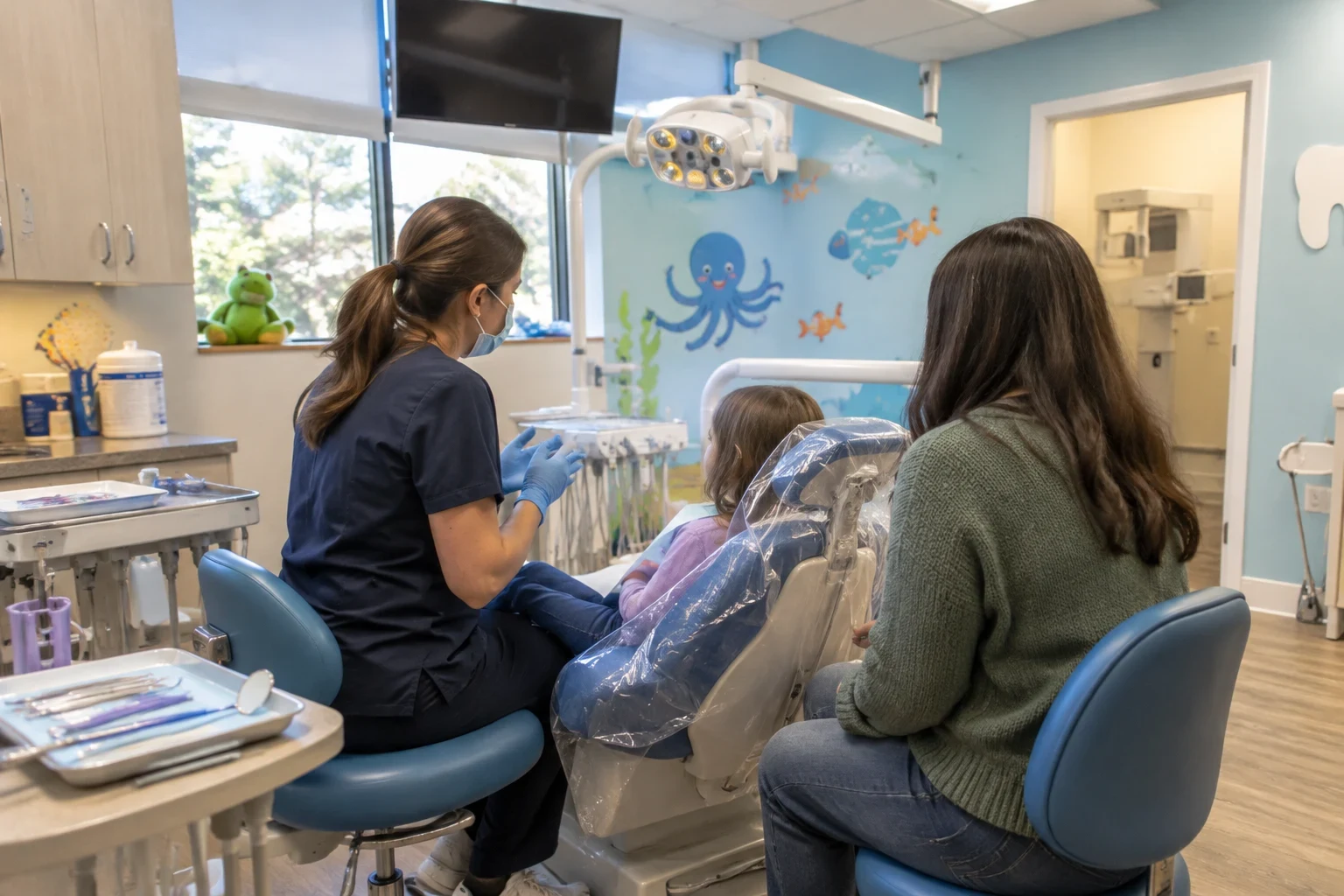
We show your child the mirror, the light and the little brush we will use. Many kids have sealants placed during the same visit as their exam and cleaning.
- 2
Pictures and cleaning
We take the before pictures, then clean each groove and place cotton rolls to keep the tooth dry. Your child can rest their jaw on a soft prop if that is more comfortable.
- 3
Prepare the surface
A mild gel goes on the groove for a short time and is rinsed off. It roughens the enamel slightly so the sealant can grip. It tastes a little sour, which we mention ahead of time so there are no surprises.
- 4
Seal and set
We paint on the sealant and use the curing light to firm it up. Most kids are done with a few teeth in well under half an hour.
- 5
Show and tell
We take a second set of images and walk you through them. Your child can eat and drink normally as soon as they leave.
Sealant Questions From Parents
Does getting a sealant hurt?
No. There are no shots and no drilling. Most kids say the worst part is the tart taste of the conditioning gel, and a quick rinse clears it away. The only other thing we ask is that they hold still with their mouth open while we work.
How long do sealants last?
They often last several years, and sometimes much longer. We check each one at your child's regular exams and cleanings and compare it with the images from the day it was placed. If an edge wears, we touch it up.
If my child has sealants, can they skip brushing those teeth?
No. Sealants cover the chewing surface only, not the sides or the spaces between teeth. Brushing, flossing and fluoride treatment still matter for healthy teeth.
I've heard about BPA in sealants. Should I worry?
It is a fair question. Any exposure from sealant materials is extremely small and brief, mostly right after placement. We are happy to talk through the material we use and answer your questions before you decide.
Should baby teeth get sealants?
Usually the focus is on permanent molars. If a baby molar has very deep grooves or your child is prone to cavities, we may suggest sealing it and will show you the pictures that led to that advice.
Protect Those New Back Molars
If your child's molars are coming in, a quick sealant visit can be part of their next checkup. Families from Taunton, Raynham and Norton can set up a visit by phone, and we will show you the photos at every step.